
Storage and Workflow Built Into Layout
Kitchen Remodels in Albertville for homes with outdated cabinetry and inefficient layouts
Kitchens designed thirty or forty years ago often place the sink far from the stove, provide minimal counter space for food prep, and include cabinets too shallow to hold modern appliances or cookware. You work around these limitations daily—setting groceries on the floor because counters are full, walking extra steps between work zones, or storing pots in the basement because upper cabinets won't accommodate their height. A kitchen remodel addresses these functional problems by relocating fixtures to reduce wasted motion, adding deeper cabinets that hold full-size items, and configuring countertops to provide uninterrupted work surfaces adjacent to cooking and cleaning zones. Caliber 1 Contracting plans kitchen layouts around your specific workflow, placing the sink, stove, and refrigerator in positions that minimize steps during meal preparation and cleanup.
The work involves removing old cabinets and countertops, relocating plumbing and electrical to match the new layout, and installing updated components that improve both storage capacity and daily usability. Cabinets built from solid wood with dovetail joints and full-extension drawer slides last decades longer than particleboard boxes with stapled corners, maintaining alignment and smooth operation despite daily use.
Request a kitchen design consultation to review layout options and material selections.
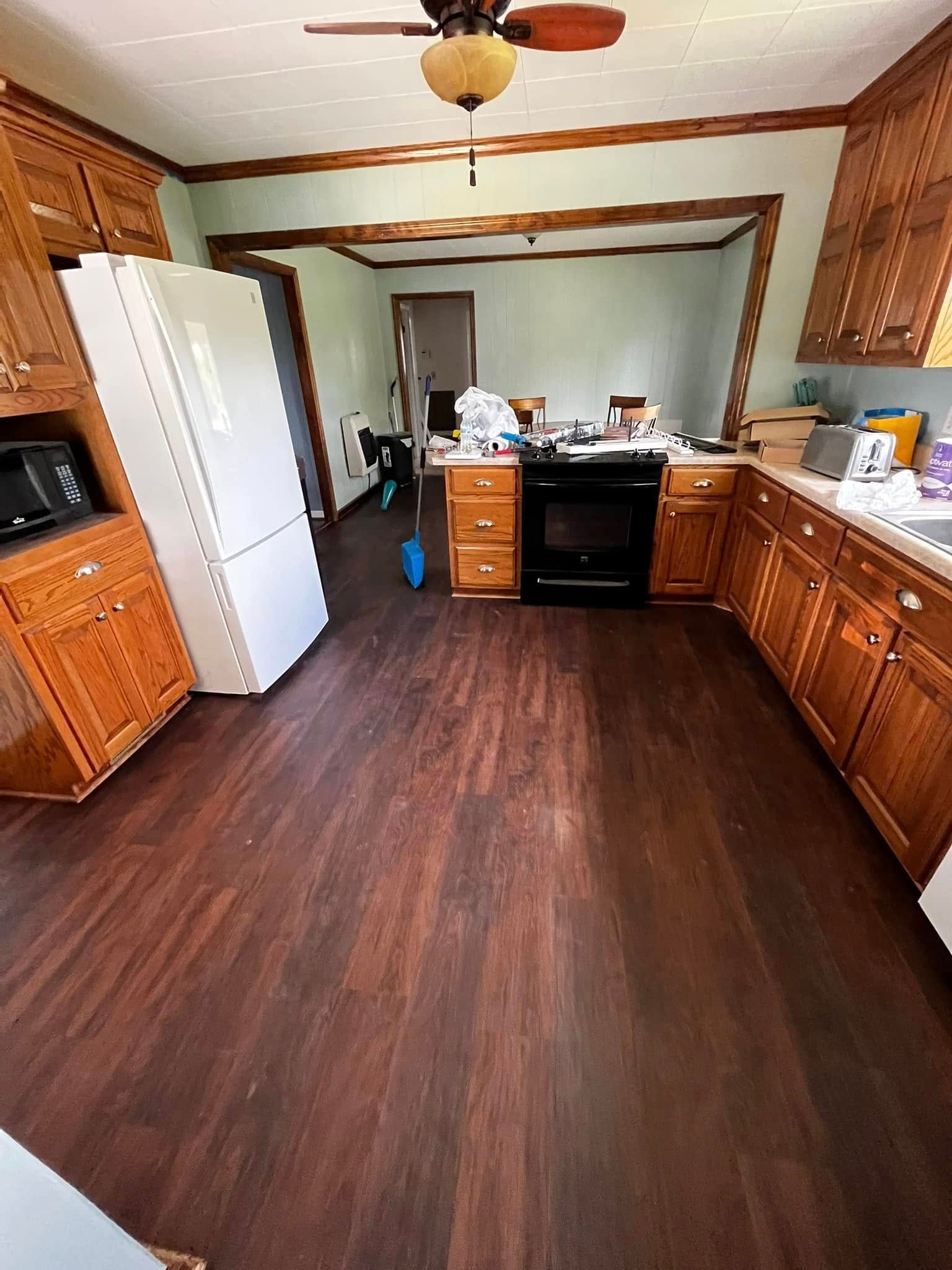
What Proper Kitchen Renovations Require
Relocating a sink means rerouting drain and supply lines inside walls or floors, ensuring proper slope for drainage and adequate venting to prevent slow drains and sewer gas odors. Moving a stove requires running new gas lines or upgrading electrical circuits to handle the amperage modern ranges demand—240-volt circuits for electric ranges and properly sized gas lines for BTU output that won't starve the burner of fuel during high-heat cooking.
Once installation completes, you'll notice drawers glide open fully to reveal contents at the back, eliminating the need to crouch and reach into dark cabinet corners. Countertops extend beyond appliances with enough space to set down hot pans or stage ingredients without crowding the sink or cooktop. Lighting installed under wall cabinets illuminates work surfaces directly, removing shadows that made chopping and reading recipes difficult under the old ceiling fixture alone.
Material durability affects long-term value—quartz and granite countertops resist scratches and heat better than laminate, while tile backsplashes handle splatter and moisture without the warping that occurs with painted drywall. Stain-resistant finishes on cabinets simplify cleaning, and moisture-resistant flooring options like luxury vinyl or sealed tile handle spills without the cupping and edge swelling that damages traditional hardwood in high-moisture areas.
Answers to Frequent Service Questions
Homeowners planning kitchen remodels in Albertville typically ask about layout decisions, material performance, and how long the work disrupts daily routines.
What's the difference between partial and full kitchen renovations?
Partial remodels update cabinets, countertops, and finishes while keeping the existing layout intact, while full renovations move walls, relocate plumbing and electrical, and reconfigure the entire floor plan to improve workflow and storage.
How does cabinet depth affect storage capacity?
Standard 12-inch upper cabinets can't hold dinner plates wider than 10 inches standing upright, while deeper cabinets or open shelving accommodate larger items without angling them at awkward positions that waste vertical space.
When should countertops extend beyond the sink and stove?
Providing at least 18 inches of counter space on either side of the cooktop allows you to set down pots without reaching across burners, and landing zones next to the sink give you a place to stack dishes or drain vegetables without using the dining table.
What kitchen features add the most resale value in Albertville?
Functional layouts with efficient work triangles, durable stone countertops, solid wood cabinetry, and modern stainless appliances appeal to buyers more than trendy finishes that date quickly or require frequent replacement.
How long does a typical kitchen remodel take?
Full renovations involving layout changes, new plumbing, and electrical work usually require four to six weeks from demolition to final installation, though timelines vary based on material lead times and the complexity of structural modifications.
Caliber 1 Contracting remodels kitchens to improve storage, workflow, and aesthetics, using quality materials and coordinated project management to complete the work without unnecessary delays. Schedule an estimate to discuss your current kitchen's limitations and design preferences.